

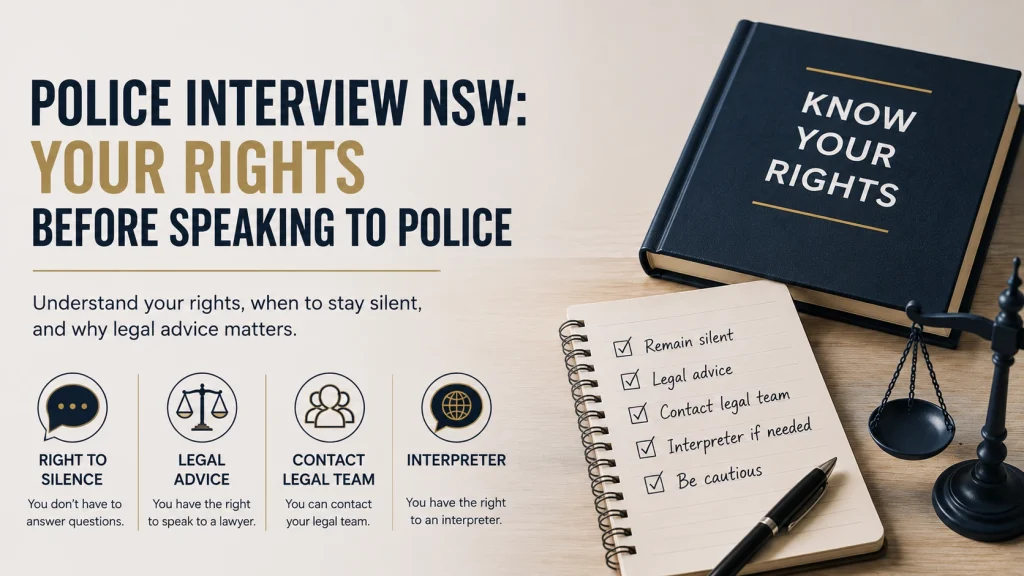
Being asked to attend a police interview can be stressful, especially if you are unsure whether you are a suspect, witness or person of interest. In NSW, what you say to police may later be used as evidence, so it is important to understand your legal rights before answering questions.
A police interview is not just a casual conversation. It may become part of the investigation, form part of a record of interview, or affect how police decide whether to lay criminal charges.
This article explains what a police interview is, when you may have the right to silence, what “no comment” means, and why legal advice before police questioning can be important.
What Is a Police Interview in NSW?
A police interview is a process where police ask questions as part of an investigation into an alleged offence or suspected criminal offence. It may involve a suspect, witness, complainant or another person who may have relevant information.
A police interview often takes place at a police station, but police questioning can also happen in other settings. Anything said to police may later be recorded, summarised, investigated further, or relied on as evidence if the matter goes to court.
Formal and Informal Police Interviews
A formal interview usually happens at a police station and may be electronically recorded. This is sometimes called a record of interview. If police later rely on that interview, the audio or video recording may become important evidence.
Informal police questioning can happen outside an interview room, such as at a home, workplace, street or public place. Even if the conversation feels relaxed, it can still matter. Police may make notes about what was said, and those notes may later be referred to in the investigation.
Why Police May Ask You to Attend an Interview
Police may ask you to attend an interview to investigate an allegation, clarify your involvement, obtain your version of events, or gather information from a witness or suspect.
Sometimes police may say they want you to “tell your side of the story” or “clear things up”. You should be careful before answering allegation-related questions. Even if you believe you are helping, your answers may create issues of self-incrimination or give police information that is later used against you.
Do You Have to Attend a Police Interview?
Whether you have to attend a police interview depends on the circumstances. The answer may be different if police are asking you to attend voluntarily, if you are under arrest, or if another legal obligation applies.
Before agreeing to attend, it is usually sensible to ask what the interview is about and speak with a criminal defence lawyer.
Voluntary Attendance at a Police Station
If police ask you to attend voluntarily, you may not be legally required to go. However, refusing or agreeing without legal advice may both carry risks, depending on the situation.
A lawyer can contact police on your behalf, ask what the allegation involves, and advise whether attending the police station is appropriate. In some cases, it may be better to decline an interview, provide a short written statement, or attend without answering allegation-related questions.
What If You Have Been Arrested?
If you are under arrest, you are not free to leave until police release you, charge you, or take other lawful steps. However, being under arrest does not automatically mean you must answer police questions about the alleged offence.
Police may keep a person in police custody for a lawful investigation period. During that time, police may ask whether you wish to participate in a police interview. You should ask for legal advice before deciding whether to answer questions, make a statement, or exercise your right to silence.
The Right to Silence in NSW
The right to silence is an important part of criminal law in NSW. It means that, in many situations, a suspect does not have to answer police questions about an alleged criminal offence.
This right exists because the prosecution must prove the case. A person does not usually have to prove their innocence by answering police questions.
What the Right to Silence Means
The right to silence generally means you can refuse to answer questions about the allegation. You may say:
“I do not wish to answer questions until I have spoken with a lawyer.”
You may also answer “no comment” during a police interview. A no comment interview means you do not provide answers to allegation-related questions. This can be appropriate in some cases, but you should get legal advice before deciding on that approach.
Can Silence Be Used Against You?
In many cases, silence by itself is not evidence of guilt. However, NSW law has rules about special cautions, adverse inference and the privilege against self-incrimination in some serious matters.
An adverse inference may arise in limited circumstances where a person remains silent about something they later rely on in their defence. These rules are technical and do not apply to every case. Legal advice is important because the effect of silence can depend on the offence, the caution given, and whether a legal representative is present.
Your Rights Before a Police Interview Starts
Before a police interview starts, you may have rights under NSW police powers legislation, especially if you are under arrest or in police custody.
These rights may include being told why you are detained, being cautioned, contacting a lawyer or support person, and asking for an interpreter if needed.
The Right to Know Why You Are Being Detained
If you are arrested or detained, police should tell you that you are under arrest and explain the reason for the arrest. You should know the nature of the allegation before deciding whether to answer questions.
If you do not understand why police want to speak with you, ask them to explain the allegation in plain language.
The Right to Contact Someone
A person under arrest may have the right to communicate with a friend, relative or another appropriate person. This can help someone know where you are and what has happened.
You should also ask to contact a lawyer. A call to a friend or relative is not a replacement for legal advice from a criminal defence lawyer.
The Right to Legal Advice
You should ask for legal advice before answering questions in a police interview. A legal representative can help you understand the allegation, the risks of answering questions, and whether it may be better to remain silent or provide a written statement.
You should not waive the right to legal advice just because you feel nervous, embarrassed, or pressured to finish the interview quickly.
Should You Answer Police Questions?
There is no single answer that applies to every case. Whether you should answer police questions depends on the allegation, the evidence, your role in the matter, and the risks of self-incrimination.
In some cases, answering questions may create more problems than it solves. In other cases, a carefully prepared written statement may be more appropriate than a full recorded interview.
Why Police May Want a Statement
Police may want a statement to obtain your account, confirm certain facts, or test your version of events. A statement may be written, oral, or recorded as part of a video recorded interview.
Once a statement is made, it can be difficult to correct or withdraw. Even small differences between your statement and other evidence may be raised later in court.
The Risks of Explaining Yourself Without Legal Advice
Many people agree to a police interview because they want to appear cooperative. However, explaining yourself without legal advice can be risky.
You may accidentally admit an element of an offence, give an unclear answer, guess about something you do not remember, or create inconsistency with later evidence. A police interview may also reveal information that police did not previously have.
Common Interview Pressure Points
People may feel pressure during police questioning because they:
- Want to leave the police station quickly
- Want to look cooperative
- Believe silence will make them look guilty
- Think police already know everything
- Do not understand the caution
- Do not want to ask for an interpreter
- Think the conversation is off the record
You should not assume anything said to police is off the record. If police want to ask questions about an alleged offence, pause and ask for legal advice.
Police Cautions and Acknowledgements
Before a police interview, police may give a caution. A caution is a warning that you do not have to say or do anything, but anything you do say or do may be used in evidence.
You should listen carefully to the caution. If you do not understand it, say so before the interview continues.
What Police Should Tell You Before an Interview
Police should explain that you are not required to answer questions if you do not want to. They should also explain that anything you say or do may later be used as evidence.
If English is not your first language, or if you do not understand the caution, ask for an interpreter or legal advice before responding.
Why Understanding the Caution Matters
The caution matters because it explains the legal risk of speaking to police. If you answer questions after acknowledging the caution, police may later argue that you understood the risk and chose to speak.
If you are confused, tired, distressed, affected by medication, or unable to understand English well, tell police clearly and ask for legal help.
Extra Protections for Young or Vulnerable People
Young people and vulnerable people may need additional support during police interviews. This is because the interview room can be difficult to understand, especially when a person is frightened, unwell, or unfamiliar with the legal system.
Young People in Police Interviews
If a young person is interviewed by police, a support person may need to be present. This may be a parent, guardian, lawyer, or other appropriate person depending on the circumstances.
A support person is not the same as a criminal defence lawyer. If a young person is being questioned about a criminal offence, legal advice should still be sought.
Interpreters and Support Needs
If you do not speak or understand English well, you should ask for an interpreter. Do not answer questions based on guessing or partial understanding.
An interpreter can help with language, but they do not provide legal advice. If you need both language assistance and legal advice, ask for both.
When You May Have to Give Police Basic Information
The right to silence does not mean you can refuse every police request. In some situations, you may need to provide basic information, such as your name and address.
The rules depend on the situation, so it is important to understand the difference between basic identifying information and questions about the alleged offence.
Providing Your Name and Address
Police may require your name and address in certain circumstances, including where they suspect you are connected with an offence or need to identify you. Refusing to provide basic identifying details may create a separate legal issue.
However, providing your name and address is different from answering questions about what happened, where you were, or who was involved.
When Police Ask for More Than an Interview
Police may ask for more than answers to questions. This may include fingerprints, photographs, samples, or participation in another investigative procedure.
Different rules may apply depending on the alleged offence and the type of request. You should speak with a lawyer before consenting to or refusing a procedure.
Why Legal Advice Before a Police Interview Matters
Legal advice before a police interview can help you make an informed decision. A lawyer can explain your rights, discuss the risks of answering questions, and help you decide whether to participate in an interview.
A lawyer may also contact police, clarify the allegation, and help you understand what may happen next.
How a Lawyer Can Help Before the Interview
Before the interview, a criminal defence lawyer may help you:
- Understand whether you are a suspect, witness or person of interest
- Ask police what the allegation involves
- Consider whether you should attend voluntarily
- Decide whether to answer questions or exercise your right to silence
- Prepare a written statement if appropriate
- Ask for an interpreter or support person if needed
- Understand possible bail or charge risks
How a Lawyer Can Help During or After the Interview
During or after the interview, a lawyer may assist by:
- Advising whether questions should be answered
- Helping identify confusing or repeated questions
- Advising on the wording of a written statement
- Reviewing the record of interview
- Discussing bail concerns if charges are laid
- Preparing for the next stage of the criminal process
What Happens After a Police Interview?
After a police interview, police may release you, continue investigating, issue a Court Attendance Notice, charge you, or consider bail.
The next step depends on the evidence, the seriousness of the allegation, and whether police believe further investigation is needed.
Released, Charged or Required to Return Later
After an interview, police may:
- Release you without charge
- Release you while they continue investigating
- Charge you and give you a court date
- Make a bail decision
- Ask you to return later
- Serve a Court Attendance Notice at a later date
You should get legal advice if any of these steps occur, especially if you have been charged or given court documents.
Step-by-Step Summary: What to Do if You Are Asked to Attend an Interview
If police ask you to attend a police interview:
- Stay calm and be polite.
- Ask whether you are under arrest.
- Ask what the allegation or investigation is about.
- Do not answer allegation-related questions before legal advice.
- Ask to speak with a criminal defence lawyer.
- Ask for an interpreter if you need one.
- Do not guess, speculate or fill gaps in your memory.
- Do not sign a statement you do not fully understand.
- Keep a note of who contacted you and what was said.
- Speak with a lawyer before deciding whether to participate in the interview.
Speak to KPT Defence Lawyers Before a Police Interview
A police interview can affect the direction of a criminal investigation. What you say may later be used as evidence, and an unclear or rushed answer may create problems in court.
KPT Defence Lawyers can assist with police interview advice, right to silence issues, police station attendance, and NSW criminal defence matters. If police have asked you to attend an interview, contact our team before deciding what to say.
Disclaimer: The above content is for general informational purposes only and should not be regarded as legal advice. The information provided may change over time. You should always seek professional advice before taking any action.